USB to Peri1 bus interface
A question, a problem or a suggestion, don't hesitate : a little email
Project aim
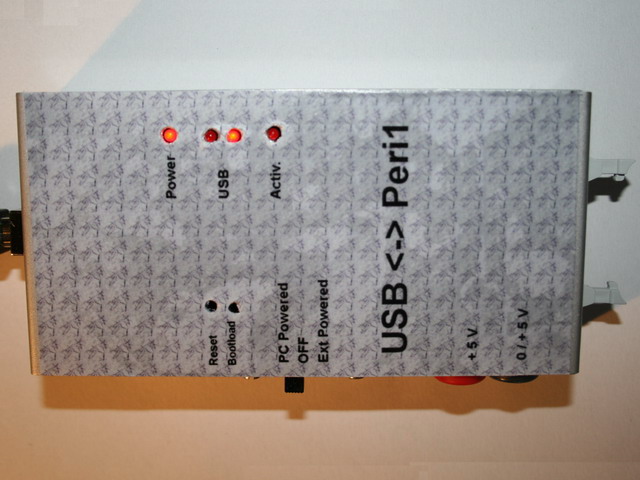
An interface between a PC and the standard bus "Peri1" I use for my micro-controller based projects.
Used :
- For extension boards test purposes,
- For non often used project like PROM programmer.
It's also replacing my old parallel port interface (no more present on my PC !).
Schematic
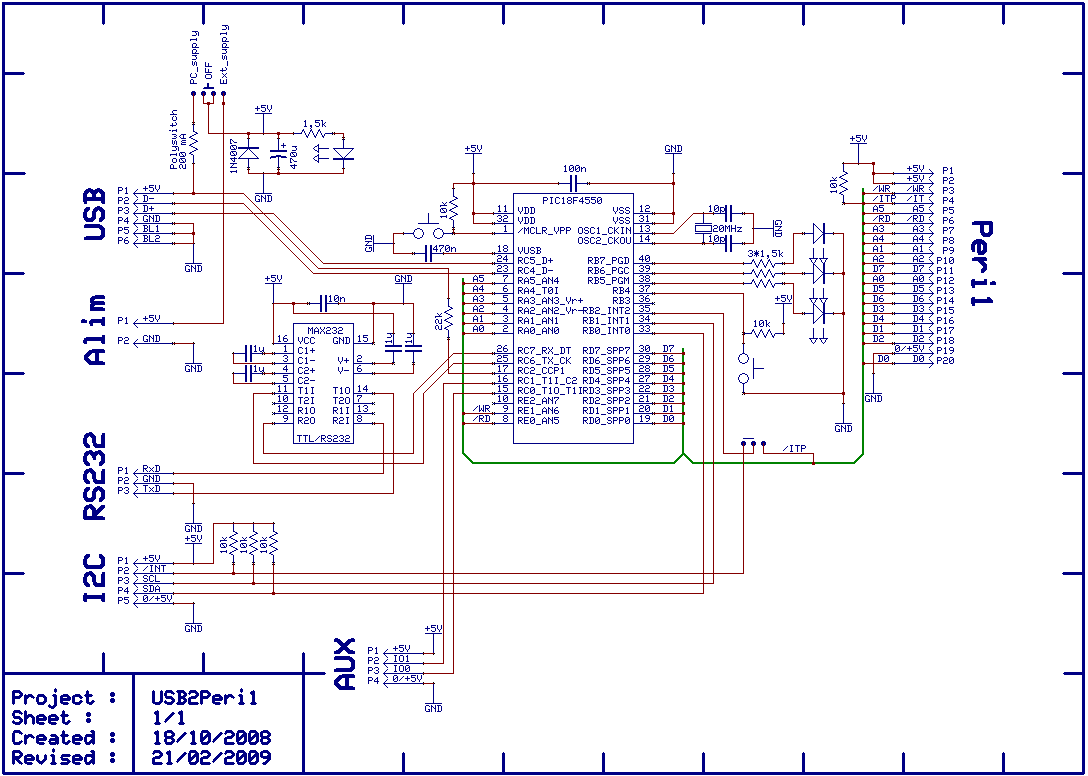
This circuit is based on an 18F4550 PIC.
For this application, all the I2C, RS232 and AUX parts can be omitted.
The supply can come from :
- The PC with a 200 mA protection, so about 150 mA for the extension boards,
- From an external source for extension boards requiring more than 150 mA.
Implantation
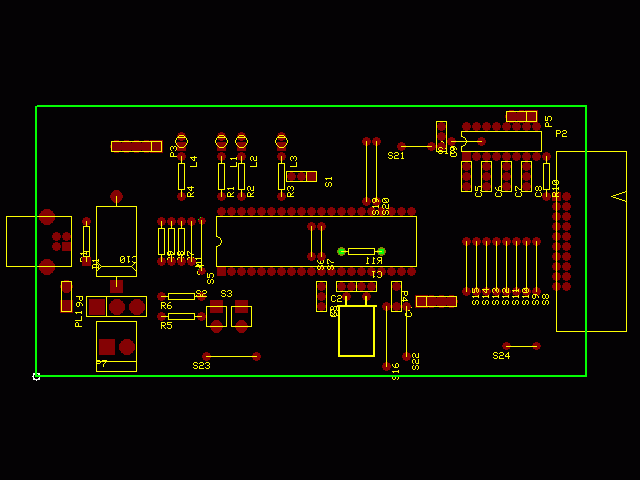
This circuit uses 20 straps to avoid a double side board.
2 straps are under the 18F4550 PIC and one under the MAX232.
The 22 k resistor is on the solder side, also under the 18F4550 PIC.
PCB
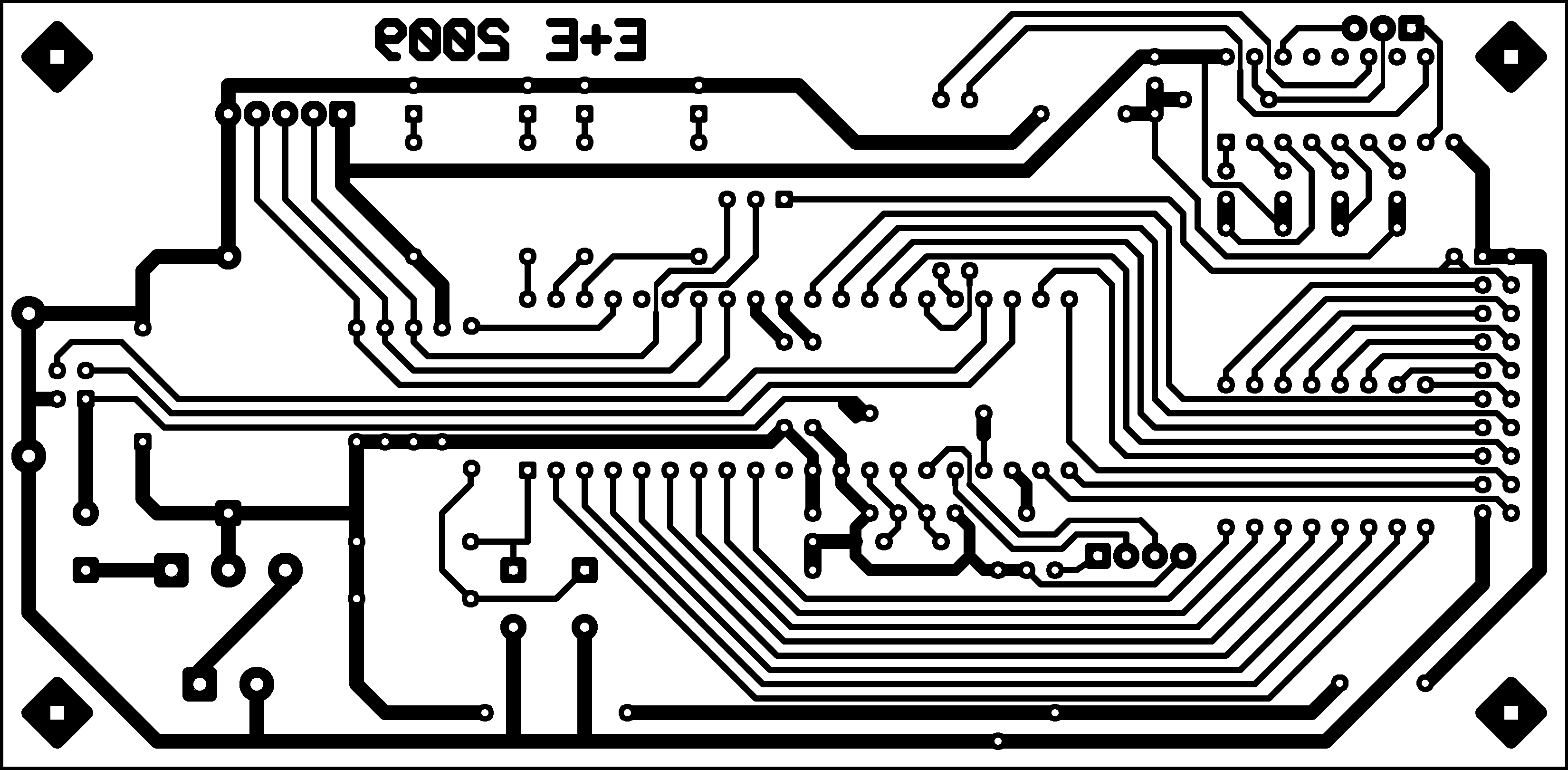
The PCB of the board.
Click on the picture to display the full resolution PCB 94 ko).
It's a 5,5 by 2,7 inches board at 600 dpi resolution.
Component side
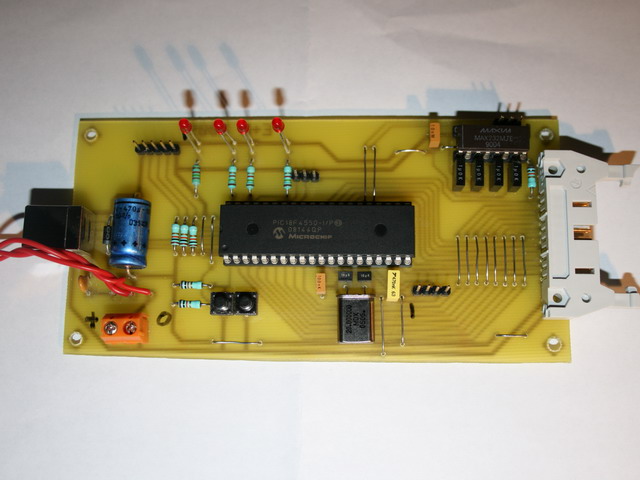
A fully populated board with 2 switches, one for the reset and one for the HID bootloader from Microchip.
Solder side
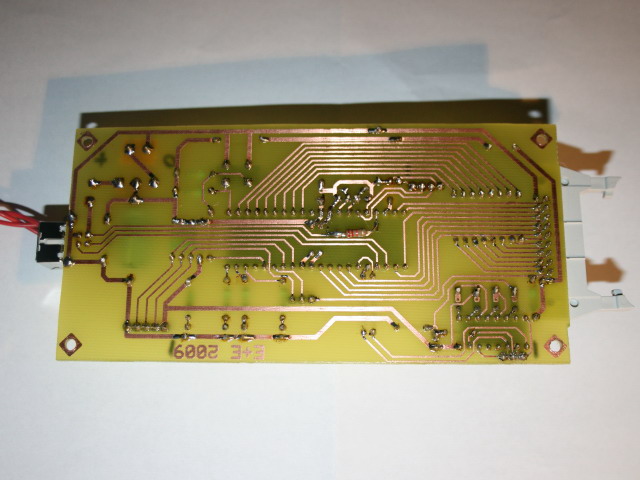
The solder side showing the 22 k resistor under the PIC.
Installed board
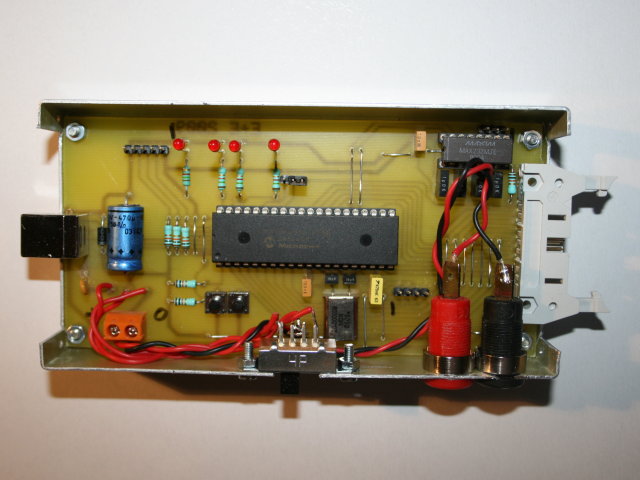
The board fits in a TEKO 4/A.1 box (140 x 72 x 28 mm).
On the picture, you see the 3 positions switch and the 2 IEC 61010 4mm sockets for the external power supply.
Front screen
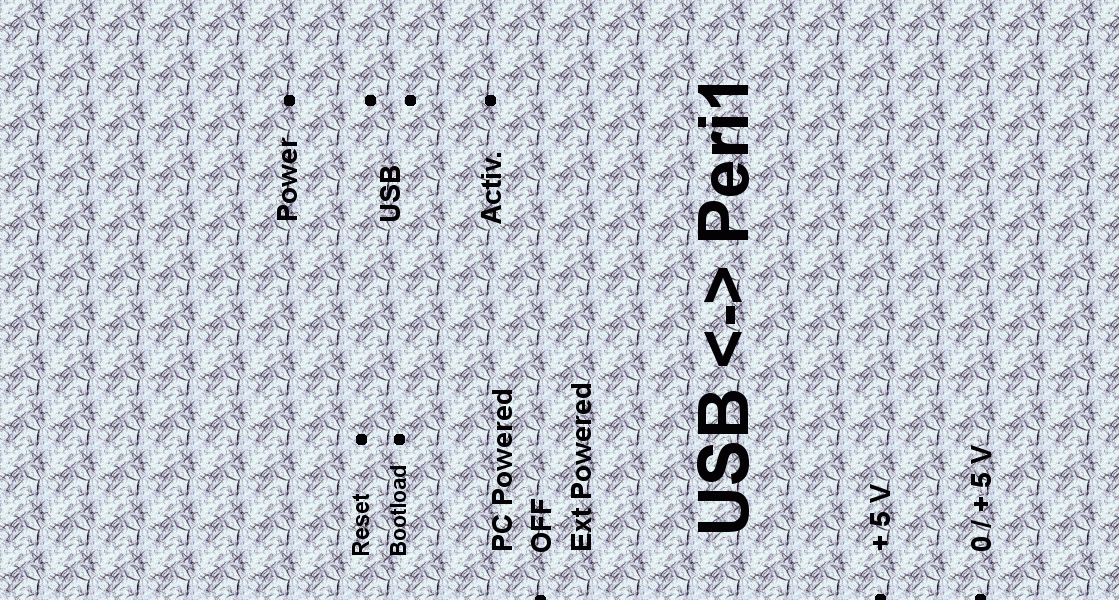
Click on the picture to display a full résolution front screen (400 ko) slightly larger than necessary.
Softwares
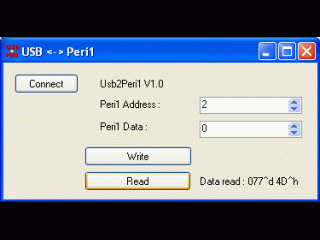
You will find here (25 ko), the V1.2 release of the bootloadable firmware of the PIC (source and .hex file) and here (53 ko) the PC software written in Visual C++ Express 2008 (".NET Framework 3.5" from Microsoft or equivalent required).
Connect you device, set the address and data and then click write or read button.
Softwares
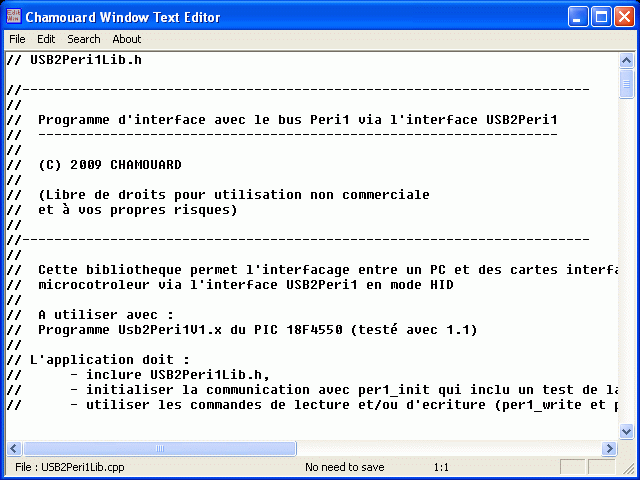
You will find here (4 ko) a library to use the interface services with every program written in C and usable with Visual C++ 6.0.
Here (25 ko) a test program of this library using a standard display keyboard with 6 keys.